


MUSINGS
Mornings with Charlie (Blan, summer of 2024)
Charlie is always ready to see the world when the sun comes up. One of the joys of this summer now that my 8:30am classes are a thing of the past, is coffee with Charlie in our gardens. Charlie is a cat – actually a white fluff ball of Persian fur, formal name is Good Time Charlie, but he prefers King Charles. He heads down the steps from the porch in a hurry, first to chase the squirrels eating the corn, peanuts, and black sunflower seeds Judy has put out for the crows, racoon, rabbit and our other critters including four deer who come at twilight. Then Charlie goes to the bird feeder to watch the morning traffic of Cardinals, Bluebirds, Goldfinches, woodpeckers, chickadees, and others who truly belong here plus many others just stopping by.
Soon Charlie is on his way around the house – the front yard is intriguing for him. His trips under the boxwoods, azaleas, hollies and other plants are to “see” who was here the night before. We can only see the present, Charlie can see the past with his sensitive nose. He is also checking on the dragonflies, fireflies, frogs and other creatures we may miss. We see many of these now by looking where he is looking and enjoying new parts of nature we missed.
When he looks up into the oaks, sweet gums, and osmanthus we sometimes see birds we have missed, when he looks down we sometimes see tiny frogs we would not have noticed. Of course, when the cicadas were here, he thought each and everyone was here for him to enjoy, chase, and sometimes even catch. As Charlie moves to the side gardens we notice new blooms, emerging plants, and other details day-by-day that we would have missed with our twice a week walks in the yards.
Then he is back in the woods, hidden in the bamboo grass, visible only by the movement of the grass as he explores another world invisible to us. Sometimes he decides to loop the yard on the paths that we put in to encourage morning and evening walks that were far too little used. Now we follow him as he picks different trails and we see new saplings, mosses, lichen and other things we have missed before. He comes running every now and then for a quick pat and reassurance we are watching every move, and then he is off again – this time perhaps down to the creek or catch basin where he is sure something is living in the drain.
We walk, sometimes sit on one of the patios, sometimes stand while Charlie sits under the front shrubs waiting for the morning dog walkers and other slow traffic on our sidewalk, some stop to say hi, others do not notice they are being carefully tracked. We have time to enjoy something new that is blooming or starting to grow, something we need to take care of, or just looking up at the blue skies and canopy of oaks, hickories, maples, pines, and sweetgums that make our lives so wonderful. This spring and early summer has had one day after another that we think is perfect, we enjoy each one knowing that soon even the morning will be hot and humid – but since February it feels every day has been perfect even though we know we have had days of rain, days when even Charlie was happy to see the world from his front bedroom window.

Remembering our 60th, August 11, 2022


Judy and I picked up Ed Hughes, Judy’s brother-in-law on our way from Raleigh through Richmond and back roads to Polymath Park in Pennsylvania. Parke drove down through back roads in upstate New York from Toronto to meet us there.
Polymath Park is a 130-acre resort in Westmoreland County, Pennsylvania. It is close to Falling Water, one of Frank Lloyd Wright’s masterpieces. The site features four historic houses: two relocated houses designed by Frank Lloyd Wright and two houses designed by apprentice Peter Berndtson. You can actually rent one of the houses realizing that you may be “on tour” from 10am to 2pm. We stayed in the Balter House and visited the other three while there. We spent another day at Falling Water. It was during the time of COVID, so were were masked during some of our tours.
The superb restaurant was closed the week we were there, but each day the staff delivered a special gourmet meal to our house. We recommend Polymath Park to anyone as fascinated by Frank Lloyd Wright’s architecture as we are.
Remembering My Father
This was posted on this site on Fathers’ Day, 2026 for my son, Parke Godfrey, as a note remember his grandfather.
Albert Barney Godfrey was a remarkable man. He was born on May 10, 1906, to Royal Grover Godfrey and Georgia Blanton Godfrey near Gaffney, South Carolina. He grew up on a poor farm in Cherokee County, SC. The farm was 155 acres, much of it in woodlands, some in pasture, and the rest cleared for farming. Each spring, he told me, he spent many backbreaking hours picking up rocks that had come to the surface over the winter and hauling them in a small wagon behind a mule to the edge of the land to be plowed. I remember my grandfather, Grover, having four mules. He would plow with two each day and let the other two rest. One of my special memories is riding a mule from the barn to the watering trough after work was done. This was an easy ride; the mule knew exactly where the watering trough was and wasn’t going anywhere else. My grandparents had an old-fashioned bell mounted on a stand behind their house. It was rung to let my grandfather or father when they were working in the fields know when lunch, the big meal of the day, was ready. I loved ringing it when I was visiting.
Albert never finished high school. The small country school he went to only went to about eighth grade, but he loved school so much he continued taking classes after he had finished the eighth grade. He then asked if he could live with an aunt in the big city of Gaffney if he did chores for her so he could attend high school there. During his junior year he took a scholarship exam for Clemson University as practice because he knew the only way he could ever go to college would be on a scholarship.
He won the scholarship, so he did not go to high school for his senior year but entered Clemson. He played football there as a freshman, he was large for his age and had played fullback for Gaffney High School. He decided that college was hard, and he needed to focus on his classes, so he dropped football. Clemson was one of the Military Colleges at that time (like VPI and VMI) where everyone was in the Corps of Cadets and ROTC. My mother told me he only had one shirt that he washed at night his first year.
He and his girlfriend (Alice Lallage Greene), my mother, were married on January 6, 1926, in secret his junior year, she remained teaching at a small school near where his parents lived. Cadets were not allowed to be married so their marriage remained secret until he graduated. Lallage had attended Yancey Collegiate Institute, a “normal school” (a teachers’ college), in Burnsville, NC. It was a two-year degree for teachers. She was two-years older than my father, so she was already teaching when they got married.
She joined him at Clemson when he graduated, and he worked for the agricultural college for a year before getting a job with the Department of Agriculture in Beltsville, MD. He started studying part-time for a Ph.D. in genetics at the University of Maryland while working full time.
He discovered that he could earn more money by traveling for the Department of Agriculture. He was sort of a “human internet” for many years. He would travel to the 47 states (there were only 48 then) that had chickens (Nevada had none) and visit the land-grant colleges in these states. The land-grant colleges (Va Tech, NC State, MIT, Texas A&M, etc.) all had large agricultural colleges. He would share with them the research happening at the Beltsville Agricultural Research Center and learn about their research and bring it back to Beltsville). Some trips were only a few days, but when he went to California, Washington and Oregon his trips were often as long as six weeks since they were by train. He sent me postcards of the trains and gave me match books from the hotels where he stayed that I pasted in a scrapbook.
Many times, when he was on a trip, Lallage would attend his classes at Maryland and take copious notes. She said she never understood what was important or not since she had never studied genetics, so she just wrote down everything the professor said. He finished his PhD. the year I was born. One of my favorite pictures is my father in his cap and gown hold me as a baby. For his PhD, he had to pass two qualifying exams in German and French. My mother taught him French, and he passed on the first try. He took German at Maryland, and he failed the qualifying exam twice before passing it. My mother loved that he passed French the first time.
One of the projects that he worked on at Beltsville as a geneticist was the Beltsville White turkey. It is the predominant turkey grown around the world today. One time a few years ago your mother and I were attending a special conference on the Island of Kolocep, Croatia. The island is so small it does not allow cars, and you can walk around the entire perimeter in about an hour. On a walk we came upon a small farm with turkeys – Beltsville Whites.
In 1949 he left the government after 20 years and accepted a job as chief geneticist for Shenk Hatchery in Harrisonburg. It was double the salary, and he would be head of the breeding farm creating a new line of male crosses (hybrid chickens with superior health, growth and hatchability). Mr. Shenk was a Mennonite who believed in tithing 90%. Rockingham Memorial Hospital was the first in the nation with oxygen in every room because of Shenk’s gifts. Shenk was definitely a new-order Mennonite, and the hatchery and breeding farm had all the latest technologies. Mr. Shenk had his own airplane and loved to fly. On a trip back from a poultry conference he hit an air pocket, the wing came off, and he crashed. Both he and his passenger were killed. My father had taken the train home. Part of his employment contract with Shenk was that he would not fly with Mr. Shenk. He did not like small planes and amateur pilots.
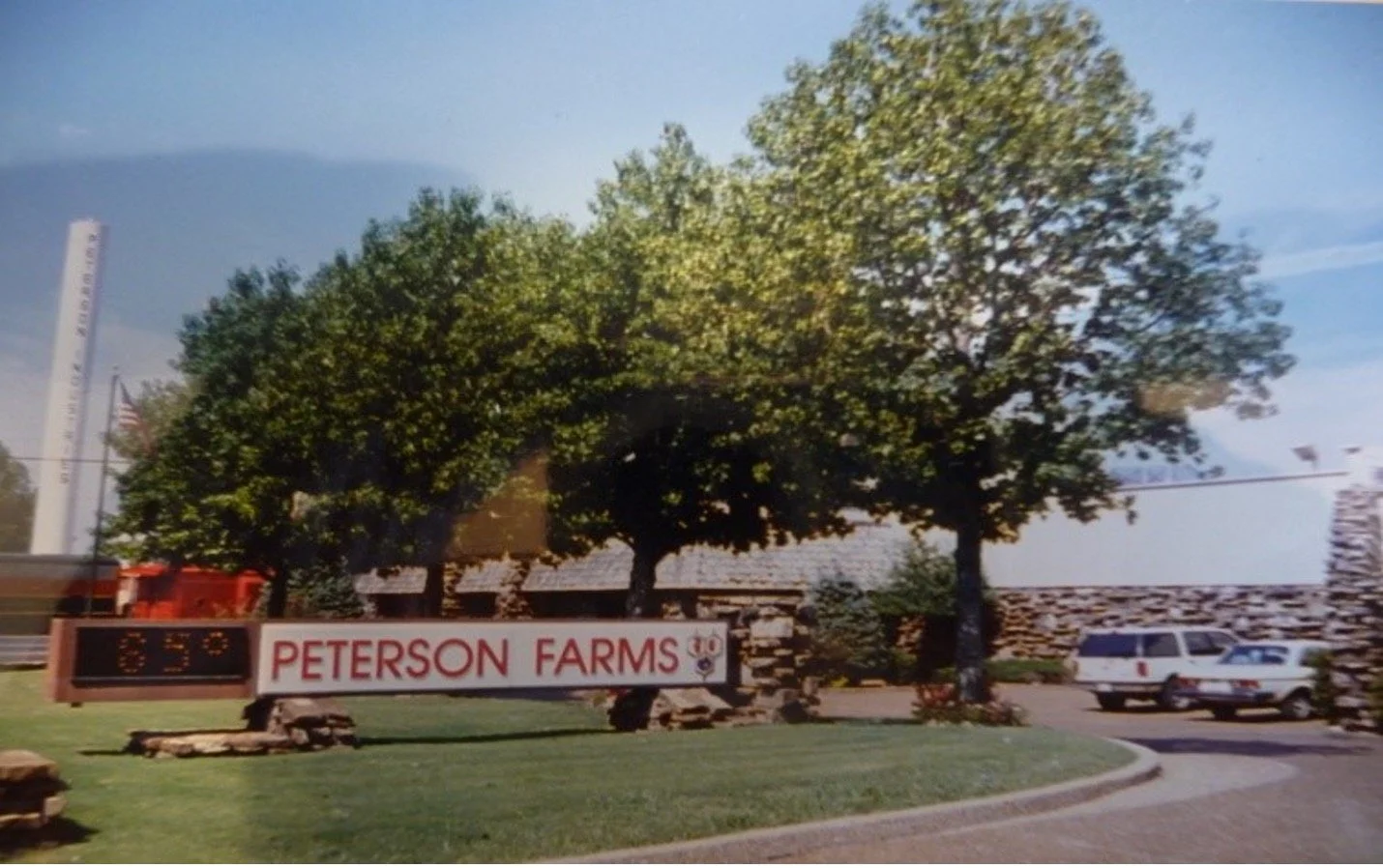
Mrs. Shenk tried to run the business after that, but it soon was struggling. The breeding farm was profitable and quite well known by then and had many interested buyers. So, she sold it to Indian River Farms, a large chicken operation in Lancaster, PA. My father was sold along with the farm, so he found himself one of four or five geneticists and no longer able to make all the breeding decisions although it was the Shenk Cross that Indian Rivers wanted. He worked for Indian River Farms for only about a year, then spent a year exploring whether he could start his own breeding farm, and then accepted the job of chief geneticist for Peterson Farms in Decatur, Arkansas. He took some of the chickens he had been breeding as the Shenk Cross on his own with him to Peterson. Recently I stumbled on an article about Arkansas that mentioned that today the Peterson Cross accounts for about 80% of the chickens raised in the United States and is the dominant cross in the world. (see note below).
He loved working for Lloyd Peterson, but he and my mother missed their Virginia friends, had trouble adjusting to life in a 350-person town, and missed two special grandkids back in Harrisonburg. He talked Lloyd Peterson into considering a branch on the east coast and moved back to Harrisonburg to create it. That did not work out, and he went to work for a breeder in Richmond whom he decided was a crook, then another in Greensboro, then one in Tennessee and then “retired” to move back to his home farm and teach biology at Limestone College in Gaffney. He was asked to become the Head of the Science Department at Garner Webb University when they became a four-year college and absolutely loved teaching, being a part of the school, and breeding cattle on the farm he had inherited. There were breakthroughs in biology in those days almost every month with DNA and RNA, and he would study for his classes until almost midnight every night. I was in graduate school at Florida State University many of those years, and when we would visit, he would quiz me about what applied statistics I was learning. He knew far more than I did.
He always loved animals and small children. We always had a dog and cats. When we lived outside of Richmond one day he found a dog hurt on the road bleeding, brought him home, got out his medical kit and sewed him up, and he was our dog for the next however many years. He once found a kitten in a rain barrel, brought him home, and he became our cat. He loved his chickens and later his cows, they all had names. At the First Baptist Church in Gaffney, he volunteered to take care of the little children during services. On the farm in South Carolina, he would walk through the woods every day to check on the cows and bull, the collie, Lady, following closely behind, and the fluffy orange cat following Lady.
He worked incredibly hard all his life. As a child and young boy, he cleared the fields of rocks every spring, helped with the plowing and planting and weeding, took care of the milk cows, mules, and chickens, and did many other typical farm chores. When he was three, his parents left him in charge of his younger sister, Beatrice, when they went to take care of the animals. Beatrice got too close to the fire, caught her clothes on fire, and died. His parents blamed him, and he was troubled by this his entire life. He was always nervous about having a fire in the fireplace at home. In our homes in Maryland and Virginia, we had big gardens that he took care of after working all day and on Saturdays. On the farm in South Carolina, he had an even bigger garden and almost thirty cows and a bull. He would often teach in the mornings and come home and work outside until after dark.
He loved to swim, was a good athlete, and he loved all kinds of ball. In Maryland he played semi-pro baseball, and in Virginia fast-pitch softball. Although right-handed, he batted left. He started playing golf in South Carolina, and they joined a country club. I bought him a left-handed set of clubs, but he decided he liked swimming in the club pool more. I don’t think I ever played golf with him. He took me to see the Yankees and Red Sox once when I was about nine or ten (Ted Williams was playing left field for the Sox), and we went to the Harrisonburg Turks baseball games frequently together until I got older and started working the games selling peanuts and crackerjacks. He always went to my football games.
He and my mother had many friends in Maryland and Harrisonburg – mainly through the church. They played bridge with many of these friends or canasta almost weekly. We went to Lost River State Park in West Virginia almost every Sunday in the summer after early church with the Stitelers, MacInturfs and others. My mother taught ceramics in Glen’s Fair Price Store where Glen had a kiln and sold molds and other supplies, and she taught classes for many of the Mennonite wives of my father’s co-workers in Park View, a mostly Mennonite suburb of Harrisonburg. She later had her own kiln and many molds.
My father started the Boy Scout troop in the Harrisonburg Baptist Church when I was too old for Cub Scouts, and he was the Scout Master until I outgrew scouting. We went on many hikes on the Blue Ridge Parkway and Skyline Drive. We often stayed in the lean-to structures on the trails or in tents. Several summers our scout troop attended Boy Scout camps where we cooked our own meals, stayed in our own tents, and enjoyed the camp facilities for two weeks. He brought in many boys from all over Harrisonburg, many of whom became my good friends in high school. One, Desmon Weichel, I still keep up with. A few years ago, Desmon told me that Glen Shomo who was the assistant Scout Master with my father, became Scout Master after my father, and continued until he was in his 80s. Glen died in May 2025 at 90. Desmond gave me Glen’s phone number a few years ago when I was in Harrisonburg, and Glen and I had a great old memories chat.
My father died in 1974, my first year working at Bell Labs. He was incredibly proud of me as his only son and especially proud when I finished my PhD. He loved his only Godfrey grandson, and he would have burst with pride when you finished your PhD at Maryland after going to UNC-Chapel Hill and Georgia Tech.
The original of this was written for Debbie Figgatt Sprouse, my niece and my father’s first grandchild, for her storybook a few years ago. I revised it for you, Parke, on June 14, 2025. I revised it again on June 19, 2026 and added some pictures. It is a nice way to remember my father for Fathers’ Day.
An interesting note about Yancey Collegiate Institute is at https://tribpapers.com/archive/2023/03/history/yancey-collegiate-institute-a-second-attempt-at-a-local-high-school/53778/
Information about Peterson Farms and Peterson Industries can be found at https://redcombgenetics.co.nz/peterson-industries/
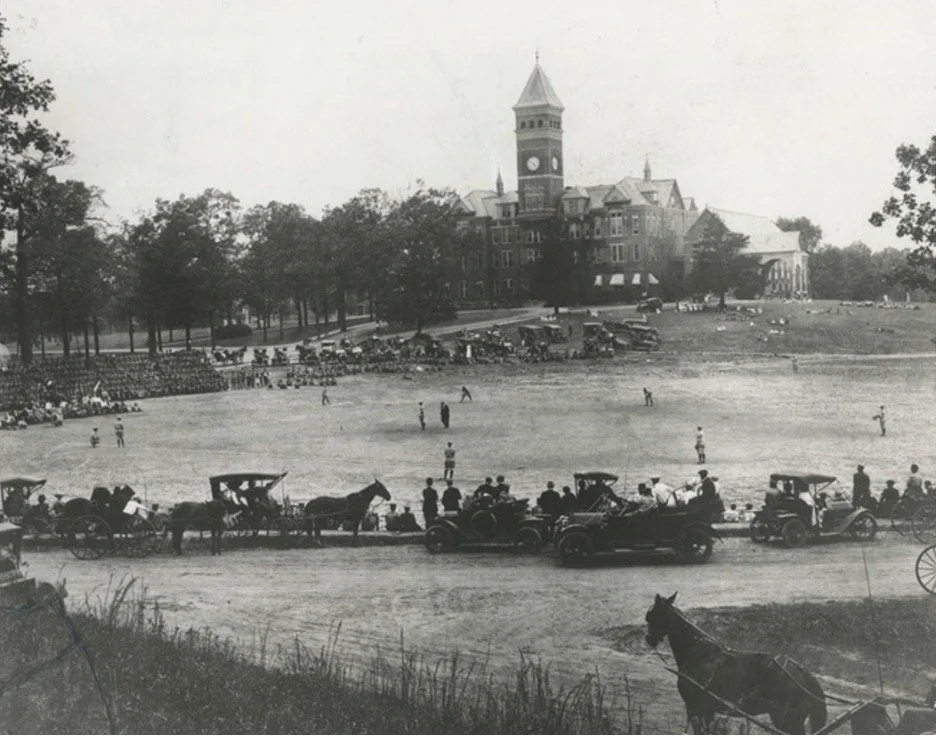
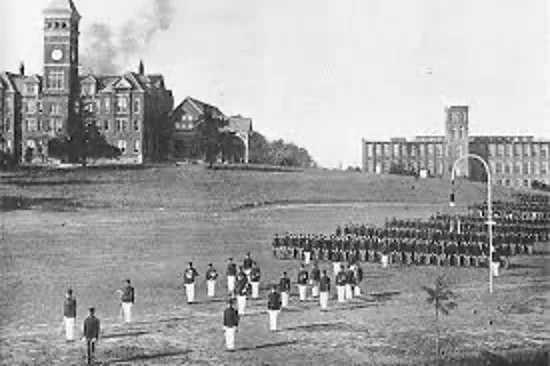
The drill field at Clemson in 1924.
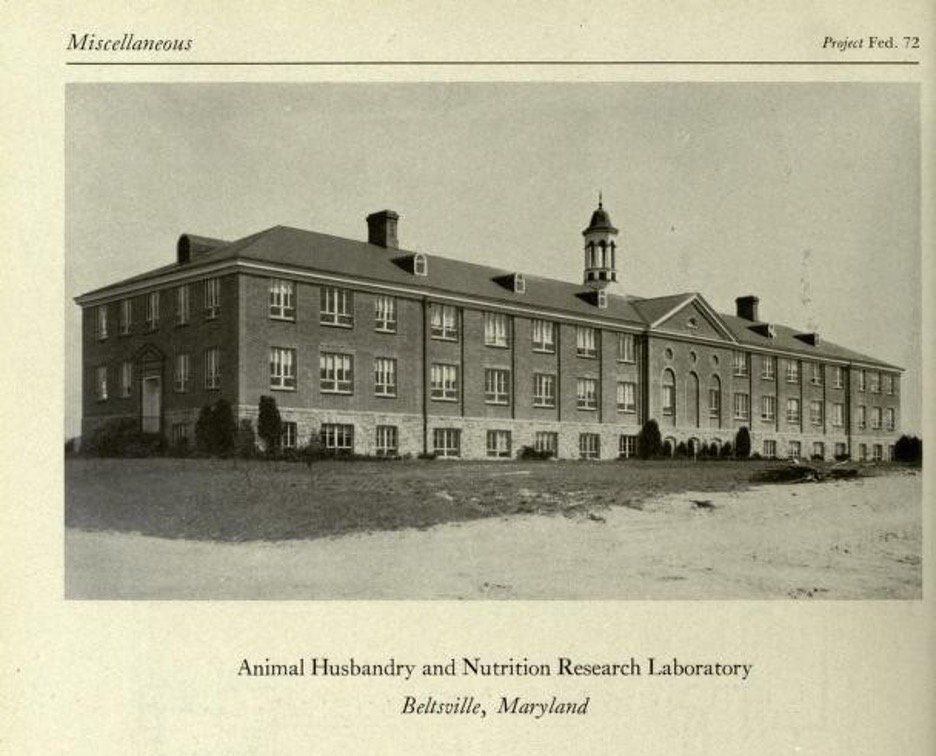
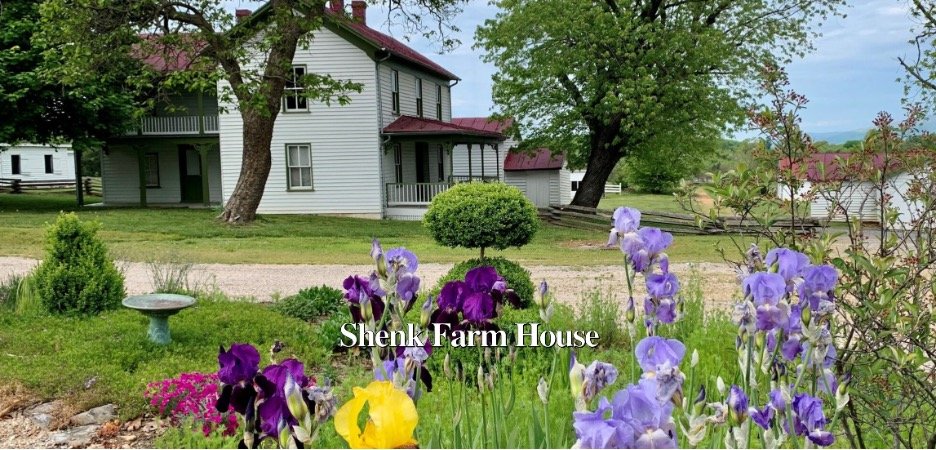
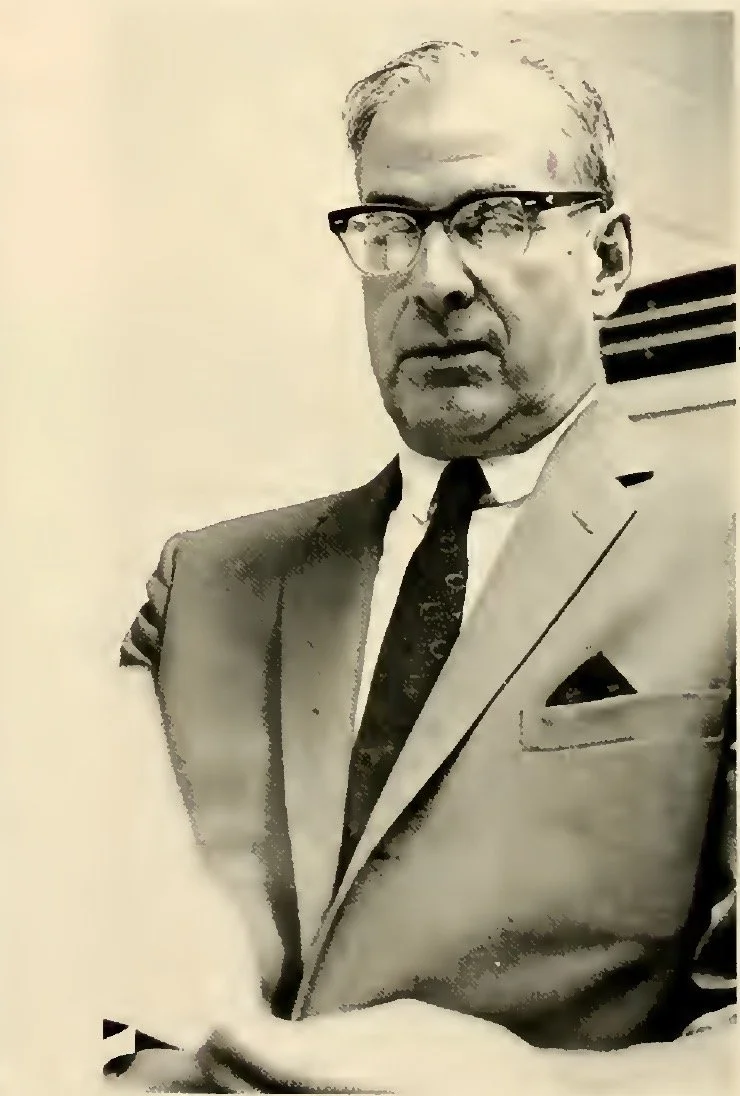
Dr. Albert B. Godfrey served as chairman of the Science Department from 1968 to 1974. He actively instilled the importance of awareness to both students and teachers through his dedication to life of all forms and its development.
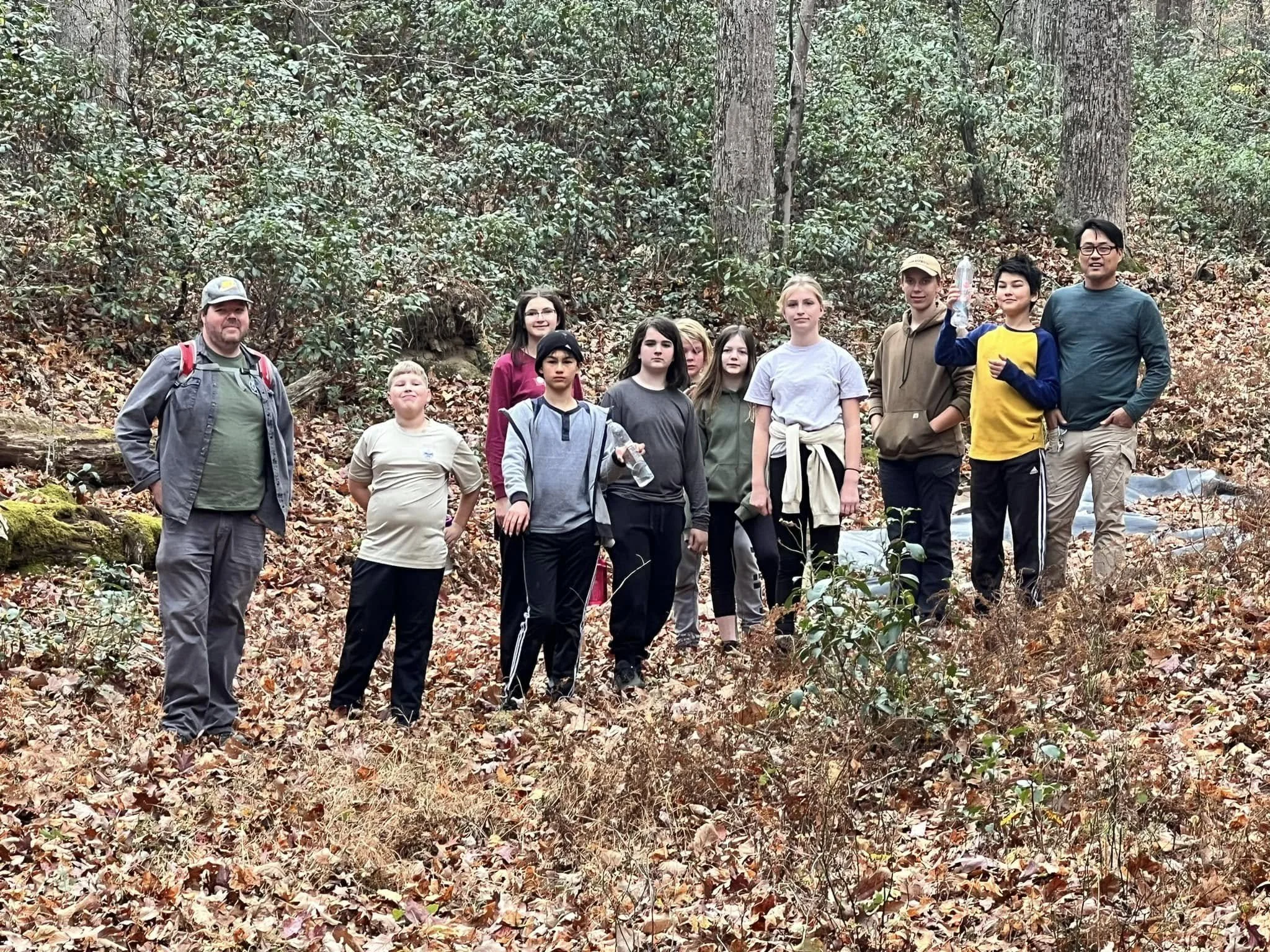
Troop 42 is still active - but the membership sure looks different than it did in my days.